The Ghost And The Green
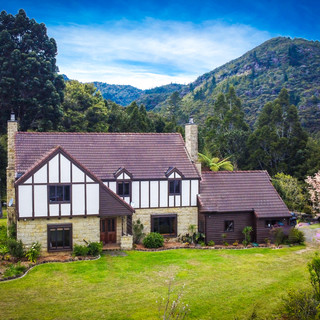

There is a specific kind of silence in the Onetai Valley, but it wasn’t bought cheaply. It was earned over a century of violence and sweat.
If you stood on this exact ground 140 years ago, you wouldn’t hear the tūī or the soft rush of the stream. You would hear the bone-shaking crack of a Kauri heart breaking. You would hear the roar of the driving dams—massive wooden gates that held back millions of liters of water until the moment they were tripped, sent a wall of logs and debris thundering down toward the coast.
The Coromandel wasn’t a sanctuary then. It was an extraction site.
The men who moved through these ranges were "Kauri Kings" and gold seekers, people who looked at the Green Wall and saw a puzzle to be solved and a fortune to be hauled away. They carved tramlines into the impossible slopes and built a world out of mud and iron. Every trail you walk today was originally a scar—a route cut by boots and bullocks to move the literal foundation of New Zealand out to the sea.
But the valley has a long memory, and an even longer patience.
When the gold veins ran thin and the last of the giant timber was hauled away, the machines stopped. The iron rusted. The men left.
And then, the forest did something remarkable: it moved back in.
This is what makes the Coromandel Forest Park so hauntingly beautiful today. It isn't "untouched" wilderness; it is recovered wilderness. It is a 71,000-hectare survivor. When you look at the Green Wall now, you are looking at the victory of the land over the industry. The moss has swallowed the tramlines. The Kauri are regrowing in the shadows of their ancestors. The silence we enjoy today is the deep, heavy exhale of a landscape that is finally allowed to rest.
Onetai sits in the middle of this hard-won peace.
Our 22 acres aren't just a "view." They are a piece of that story. We chose this spot because you can feel the layers of time here.
You can feel the ghost of the old New Zealand in the ruggedness of the terrain, but you are enveloped by the vibrant, living reality of the new one.
We didn’t build a lodge to change the valley; we built it to witness its recovery.
We’ve traded the timber axe for the orchard spade and the gold pan for the morning coffee. Our role is simple: to be the stewards of this quiet chapter. To make sure that after a century of being used, the land is finally allowed to just be.
The coast is where the world changes every day with the tide.
The valley is where the world remembers. When you step onto our legacy trails, you aren't just going for a walk. You are stepping into a hundred-year conversation between the ghost of the past and the green of the future.
Come and listen to what the forest has to say.
The rush is over. The silence is here.


Comments