The Green Wall: Why the best of the coast is inland
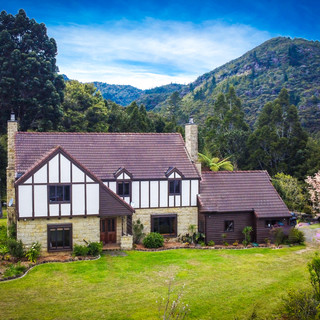
There is a geographical misconception about the Coromandel that most travelers carry in their pockets: they believe the region ends where the sand begins. They see the peninsula as a thin crust of beaches draped around a hollow center. But to understand the true soul of this land—and the reason a sanctuary like Onetai exists—you have to look at the "Green Wall."
This is the massive, vertical spine of the Coromandel Ranges. It is an ancient ecosystem that doesn't just provide a backdrop for the ocean; it dictates the very climate of our lives.
While the coast is a place of exposure—high sun, salt spray, and the constant movement of the tide—the inland valley is a place of enclosure. As you move into the bush, the temperature drops by a palpable three degrees. The air is filtered through thousands of hectares of native canopy, stripping away the dust of the highway and replacing it with the heavy, oxygen-rich scent of damp ponga and earth.
Seasoned travelers are beginning to realize that "coastal fatigue" is a real physiological state. Constant exposure to the bright, flat light of the Pacific can over-stimulate the nervous system. To truly recover, the human eye needs the "Fractal Green"—those complex, repetitive patterns of fern and forest that allow the brain to stop scanning for data and start resting in depth. It is not just a view; it is a neurological reset.
The journey here is a transition from the horizontal to the vertical. When you drive the Thames Coast Road, you are moving along the edge of the world. It is beautiful, but it is two-dimensional. The moment you turn inland toward the sanctuary, the topography takes over and the world gains a third dimension.
This is where the transition becomes internal. As you climb, the cell signal begins to fail, the bars on your phone flickering and then vanishing as the hills rise to meet you. This isn't a loss of service; it is a gain of sovereignty. You have moved through "The Gap," that physical threshold where you are no longer skimming the surface of the peninsula, but entering the volume of the land.
Inside, the experience is anchored by the "Spirit" of the land—a quiet pulse found in the slow moments between things. It is the careful ritual of a long-table breakfast, the taste of fruit gathered from our own orchard, and the transition of light across the valley floor. The lodge acts as a lens for the 22 acres of nature’s pulse surrounding it, offering a sense of permanence and modern comfort that sits in effortless union with the raw bush.
This is where Pristine Bush Recovery moves from a concept to a reality. By the time you reach our private waterfall or walk the legacy trails that lead directly into the State Forest Park, you have been educated by the silence. You realize that the most profound sights in New Zealand aren't always the ones with a thousand-car parking lot. They are the ones found in the deep creases of the map—the glowworms lining the drive at night or the scent of damp fern after rain.
The coast is for the "must-see," but the valley is for the "must-be."
We invite you to stop looking at the Coromandel as a shoreline and start seeing it as a sanctuary. Use the beach for your "breath out," but come to the Green Wall to find your "breath in." Because the real New Zealand isn’t found where the water hits the land; it’s found where the forest claims it back. Looking forward to welcoming you to the quiet.


Comments